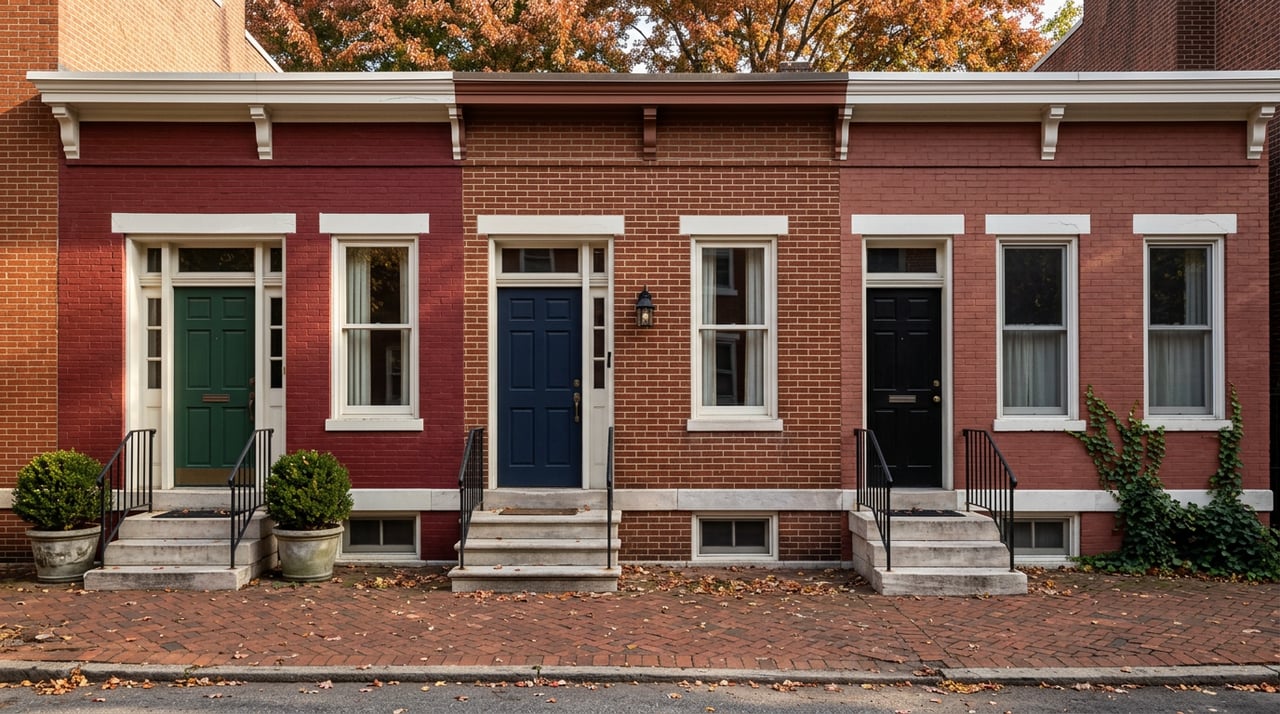
Ask a longtime Fan resident when Halloween on Hanover Avenue started and you'll get a shrug. Some say the 1980s. Nobody can point to a founding year, a city permit, or an official sponsor. There's a rumor that homeowners on the 1800 to 2200 blocks follow some unwritten set of decoration guidelines, but even that is conjecture passed between neighbors rather than anything written down. What exists instead is hundreds of trick-or-treaters showing up every October 31st between North Granby and Meadow Streets, streets that get blocked off not by city order but by residents who've done this enough years running that everyone just knows the drill.
That's not an anomaly in the Fan. It's the operating system.
The tree count that started with a grant, not a mandate
In 2004, the Historic Monument Avenue and Fan District Foundation put up a $10,000 grant so someone could finally answer a basic question: what trees does this neighborhood actually have? The resulting citywide inventory, starting in the Fan, found the neighborhood's roughly 6,000 city trees were 45 percent maples. That's not a diverse canopy. That's one species carrying most of the load, which means one bad blight season or one especially rough ice storm away from losing a huge share of the shade that makes Monument Avenue's median and every side street underneath it livable in July.
The response wasn't a city ordinance. It was a revision to the Fan District Association's existing Adopt-a-Tree program, redirected specifically toward variety instead of volume. That program still runs today, and this year's applications close September 1, which lines up with when the Fan's canopy typically starts its turn. If you've been meaning to put your name on a tree well near your block, the window is closing, not opening.
The Fan District Association handles more than trees. It maintains nine public parks in partnership with the City of Richmond. The city handles the baseline: cutting grass and hauling trash. The Association and volunteers also contribute improvements, including sidewalk repairs, irrigation fixes, and native plant additions.
Nine parks, and they don't do the same job
The Fan's pocket parks aren't interchangeable green squares. Eight of the nine have settled into a specific, nameable role in daily life, and knowing which is which saves you a wasted walk:
- Monroe Park, at the Fan's east end, sits inside VCU's campus and functions as exactly that: students cutting across on the way to class, benches full of people reading between classes.
- Scuffletown Park, tucked off Strawberry Street, is the dog-run park, with a fenced grassy section kept separate from the off-leash dirt area.
- Meadow Park is where families spread blankets on warm days and where the Association's brick sidewalk repairs are most visible.
- Paradise Park, on Grove Avenue, Sydney Park, on North Brunswick, Federal Park, on West Main, Grace Park, and Lombardy Park round out the rest, each a block or less, each serving whichever few streets surround it.
The playground at the junction of Park and Hanover avenues gets the stroller traffic. None of this is accidental variety. It's what happens when a neighborhood association spends two decades funneling small grants and volunteer hours into specific, named spaces instead of a single central park everyone has to share.
A food truck finally gets an address
Henry Fletcher spent five years running 1115 Mobile Kitchen, hauling his food truck to festivals as far as Florida and parking it around Richmond in between. This fall, he's opening Hank's Fried Chicken at 105 N. Robinson Street, a permanent home named for his late grandmother, who always called him Hank. The menu carries the truck over almost item for item: the Texas Beach with chipotle mayo, pickled red onion, lettuce, and pickles; the OG with garlic-basil mayo; a Chicken Bacon Ranch. Nearly the whole menu will also come in vegan form, a commitment Fletcher has kept since day one of the truck.
"When we walked into the space on Robinson, they was like, 'Yeah, I can see it. This makes sense.'"
That's Fletcher describing the moment his staff first saw the location. It's a small quote, but it captures the same logic running through the tree program and the Halloween block party: someone decides a specific street deserves specific attention, and puts in the years to make it stick.
Robinson Street has its own history of exactly that kind of resident-driven attention. In 2012, a VCU graduate student partnered with the Historic Monument Avenue and Fan District Foundation, a local architecture fellowship program, and Richmond's Storefront for Community Design to study the corridor's condition and talk to the business owners and residents who actually use it. That study led directly to the formation of the Robinson Street Association, which has worked with the City of Richmond on lighting, parking, and safety, and with GRTC to reduce the number of bus stops and the speed of buses along the corridor. Hank's is landing on a street shaped by neighborhood-led efforts.
Turnover is normal here, self-starting is what fills it
None of this means the Fan's food scene is static. Heritage and Ipanema Cafe, longtime names in the Fan and VCU area, both closed in 2025. Restaurants open and close in every neighborhood, and the Fan is no exception. What's worth noticing is what tends to replace the gap: not chains moving in wholesale, but operators like Fletcher who spent years building a following one truck stop at a time before committing to a lease. Hank's will double as a prep kitchen for the food truck too, so the mobile version doesn't disappear when the storefront opens. It's addition, not replacement.
What this actually means if you live here
If you've lived in the Fan for a while, you already know Halloween on Hanover gets crowded and that Scuffletown is where you take the dog. What you might not have connected is that these aren't separate quirks of a quirky neighborhood. They're the same mechanism showing up in a Halloween block party, a tree grant, a park sidewalk repair, and now a food truck owner's decision to put down roots on Robinson Street. The Fan doesn't wait for a master plan. It waits for someone willing to adopt a tree, a block, or a storefront, and then the neighborhood builds itself around that decision.
That's worth knowing whether you're heading out for trick-or-treating this year, thinking about which tree well near your porch could use a maple alternative before the September 1 deadline, or just wondering why Robinson Street suddenly has better lighting than it used to.
If you're weighing a move within the Fan, thinking about what a listing on one of these blocks is actually worth, or just curious how a neighborhood with this much resident-run infrastructure holds its value, the team at Search RVA Homes tracks these blocks year-round. Reach out anytime you want a read on what's happening on your specific street.