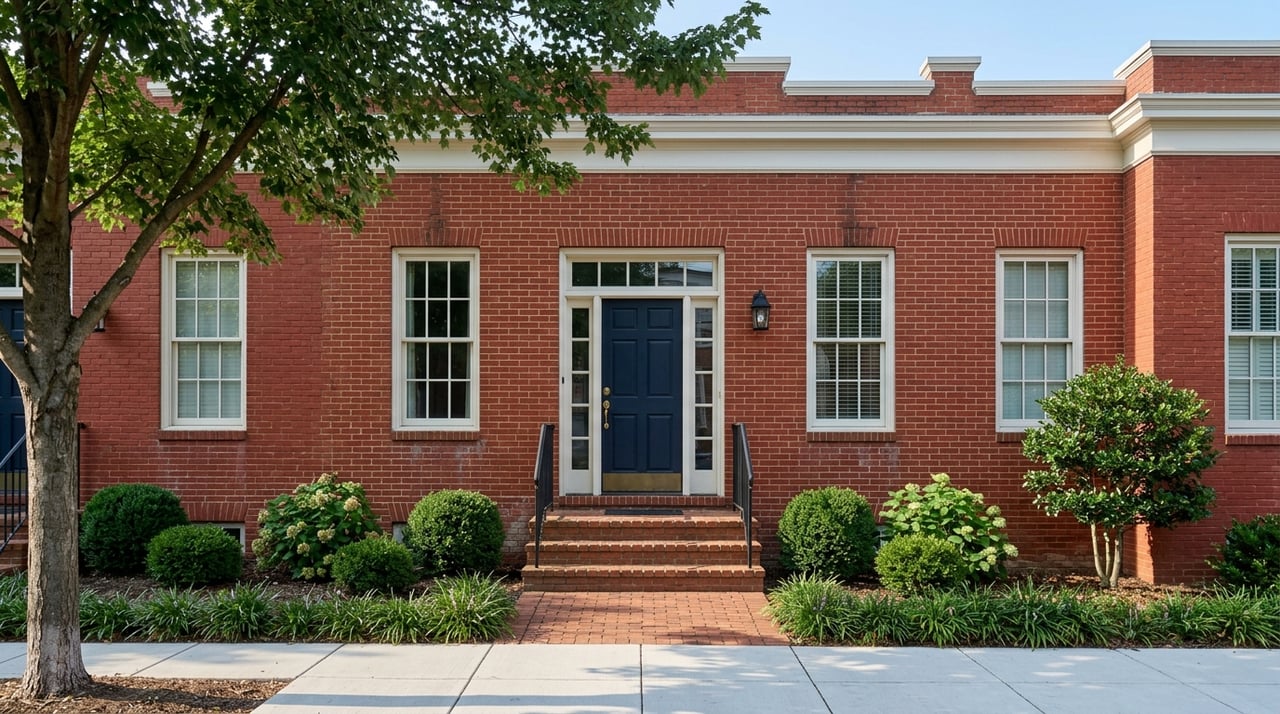
Trying to choose between a townhome and a single-family home in Midlothian? You are not alone. Many buyers find that these two options can land closer in price than expected, yet feel very different in day-to-day living. This guide will help you compare maintenance, monthly costs, layout, amenities, and local community examples so you can make a more confident decision. Let’s dive in.
Why this choice matters in Midlothian
In Midlothian, this is a common side-by-side comparison because the area offers both attached and detached housing in a range of price points and community styles. Chesterfield County’s planning documents also point to higher-density residential development in places like the Village Core, while the county as a whole still leans heavily toward detached housing.
According to Chesterfield County, about 78% of housing units are single-family detached and 5% are townhomes. The county also notes that local housing definitions can blur the lines in sales data, since single-family categories may sometimes include townhomes. That is one reason why looking at the actual property and community matters more than relying on the label alone.
Compare lifestyle first
For most buyers, the real difference starts with how you want to live. A townhome often appeals if you want less exterior upkeep, shared amenities, and a more lock-and-leave setup. A single-family home often makes sense if you want more separation from neighbors, more private outdoor space, or more room to spread out.
That said, Midlothian does not fit into neat boxes. Some single-family communities have strong HOA involvement and extensive shared amenities, while some attached-home communities offer surprisingly spacious floor plans and upscale features.
Townhome lifestyle in Midlothian
Townhomes in Midlothian often show up in communities designed around convenience and lower exterior maintenance. In many common-interest communities, owners contribute to shared insurance, maintenance assessments, and upkeep of common areas, as explained by the Virginia Common Interest Community Ombudsman.
In practical terms, that can mean exterior standards, amenity maintenance, board oversight, and architectural review. It can also mean less hands-on work for you, depending on what the association covers. The tradeoff is that you need to be comfortable with community rules and shared decision-making.
A local example is Jordan Crossing, which advertises 3-story townhomes with an included elevator, a no-maintenance exterior, and amenities like a private clubhouse, fitness center, sidewalks, and streetlights. Another example is The Aire at Westchester, which highlights attached homes, walkability to Westchester Commons, and planned amenities like parks, a pool, and a clubhouse.
Single-family lifestyle in Midlothian
Single-family homes in Midlothian often attract buyers who want more lot space, more privacy, or floor plans that spread out horizontally instead of vertically. You may find features like first-floor living, basements, larger yards, or more flexibility for hobbies, storage, and outdoor use.
But a detached home does not always mean no HOA structure. For example, Brandermill is cited in the research as a reminder that some single-family communities still include strong association management for landscaping, grounds, trails, pools, architectural review, and resale disclosures. Likewise, Hallsley emphasizes generous homesites, tree preservation, and architectural standards.
If you want a more traditional single-family option with a large amenity package, Charter Colony offers homes from 2,002 to 4,003 square feet and community features such as clubhouses, a zero-entry pool, tennis courts, pickleball courts, and walking paths. At the more lot-focused end, The Woodlands at Hallsley features homesites averaging over an acre.
Look beyond price alone
It is easy to compare only the list price, but that can lead you to the wrong conclusion. In Midlothian, a better comparison is your total monthly carrying cost.
That includes more than your mortgage payment. It can also include:
- Real estate taxes
- HOA dues
- Stormwater fees
- Special assessment district or CDA charges
- Exterior maintenance responsibilities
According to Chesterfield County real estate assessment information, properties are assessed annually at 100% fair market value, and the 2025 real estate tax rate is $0.89 per $100 of assessed value. The county’s stormwater fee is $25 per year for a detached single-family home and $7.50 per year for a townhome or condo.
Some Midlothian properties may also fall within special assessment districts or community development authorities, including areas such as the Powhite Parkway-Charter Colony Parkway Interchange district and the Lower Magnolia Green CDA. That is why two homes with similar sale prices can have different true monthly costs.
What local pricing shows
Recent county data show that both categories have seen price growth. According to a Chesterfield County market update, average resale prices increased from 2023 to 2024 in both categories, with single-family homes rising 7.7% and condos/townhomes rising 6.3%.
The same county report shows median 2023-2024 sales prices of:
- $413,278 for single-family homes
- $477,473 for new single-family homes
- $385,750 for existing single-family homes
This does not mean a single-family home is always the better investment or that a townhome is always the budget pick. In Midlothian, attached homes can still be very competitive when the location, design, and amenity package are strong.
Layout differences to think through
The floor plan matters just as much as the property type. Many buyers discover that the biggest decision is not attached versus detached. It is vertical living versus horizontal living.
Townhomes often make more use of multiple floors. That can be a great fit if you want newer finishes, lower-maintenance living, and efficient use of space. But if you prefer fewer stairs, easier indoor-outdoor flow, or a wider layout, a single-family home may feel more comfortable.
Local examples show this clearly. Jordan Crossing promotes 3-story layouts with elevators, while Charter Colony highlights larger single-family plans with options like first-floor living, basements, and third floors. Neither is better across the board. The better fit depends on how you use your home every day.
Midlothian communities show the full spectrum
One of the best things about Midlothian is that you can find options across a wide range of lifestyles. Some communities are clearly attached-home focused, some lean strongly single-family, and others blend both.
Townhome-focused examples
Jordan Crossing is one of the clearest examples of low-maintenance attached living in Midlothian. The community advertises townhomes from 2,776 to 3,002 square feet, with pricing from $479,950 to $544,950 and amenities that support a convenience-focused lifestyle.
The Aire at Westchester is another option for buyers who want attached homes in a more walkable environment, near retail and planned community features.
Single-family-focused examples
Charter Colony reflects the more traditional single-family side of the Midlothian market, with homes starting in the low $500s and a broad amenity package. It is a good reminder that detached homes can still come with neighborhood amenities and shared recreation.
The Woodlands at Hallsley shows the larger-lot, custom-oriented side of the market. Homesites averaging over an acre appeal to buyers who want more land, more customization, and a different feel than a compact attached-home setting.
In-between options
Some buyers do not fit neatly into either camp. If that sounds like you, Midlothian has communities worth a closer look.
Magnolia Green includes single-family homes, townhomes, low-maintenance age-targeted homes, and apartments across a large master-planned setting with an owner association and major amenities. Cottages at Millwood also sits in the middle, offering detached homes and paired villas with low-maintenance homesites and pricing starting in the low $400,000s.
Questions to ask before you make an offer
Once you narrow your choice, the next step is verifying the details that affect daily life and long-term cost. This is where many buyers uncover the real difference between two homes that seemed similar at first.
Before you make an offer, make sure you confirm:
- The current HOA dues
- What the HOA covers and what it does not
- Whether exterior repairs are owner or association responsibility
- Whether the property is in a special assessment district or CDA
- Whether resale packets or disclosure documents are required
- Any architectural review or exterior rule requirements
The Virginia DPOR CIC Ombudsman resources are especially helpful for understanding common-interest community disclosures and resale documents. These details matter because they shape both your monthly budget and your ownership experience.
How to make the right choice for you
If you want lower-maintenance living, shared amenities, and a community where exterior upkeep may be more streamlined, a townhome may be the better fit. If you want more land, more privacy, or a layout that lives larger day to day, a single-family home may be worth the extra cost and upkeep.
In Midlothian, though, the smartest approach is to compare the specific home, community, rules, and full monthly cost rather than the property label alone. A townhome and a single-family home can end up surprisingly close on price while offering very different lifestyles.
If you want help comparing Midlothian communities, monthly costs, and current MLS options side by side, Mark Cipolletti can help you sort through the numbers and find the best fit for how you actually want to live.
FAQs
What is the main difference between a townhome and a single-family home in Midlothian?
- In Midlothian, townhomes often appeal to buyers who want lower exterior maintenance and shared amenities, while single-family homes often offer more private outdoor space, more lot area, and different layout options.
Are townhomes in Midlothian always cheaper than single-family homes?
- No. Some Midlothian townhomes can be priced close to single-family homes, especially when they offer strong amenities, newer construction, or a convenient location.
Do single-family homes in Midlothian always have no HOA?
- No. Some Midlothian single-family communities still have HOA dues, architectural review, and shared amenity oversight, so you should always verify the community rules and costs.
What extra costs should buyers compare in Midlothian?
- You should compare property taxes, HOA dues, stormwater fees, any special assessment or CDA charges, and maintenance responsibilities, not just the purchase price.
How have Midlothian-area townhomes and single-family homes appreciated recently?
- Chesterfield County reported recent average resale price growth in both categories from 2023 to 2024, with single-family homes up 7.7% and condos/townhomes up 6.3%.
What should buyers verify before buying in a Midlothian HOA community?
- You should verify HOA dues, what the dues cover, exterior maintenance responsibilities, resale or disclosure requirements, and any architectural or use restrictions tied to the property.